
Posted Date : 01 Jun 2026
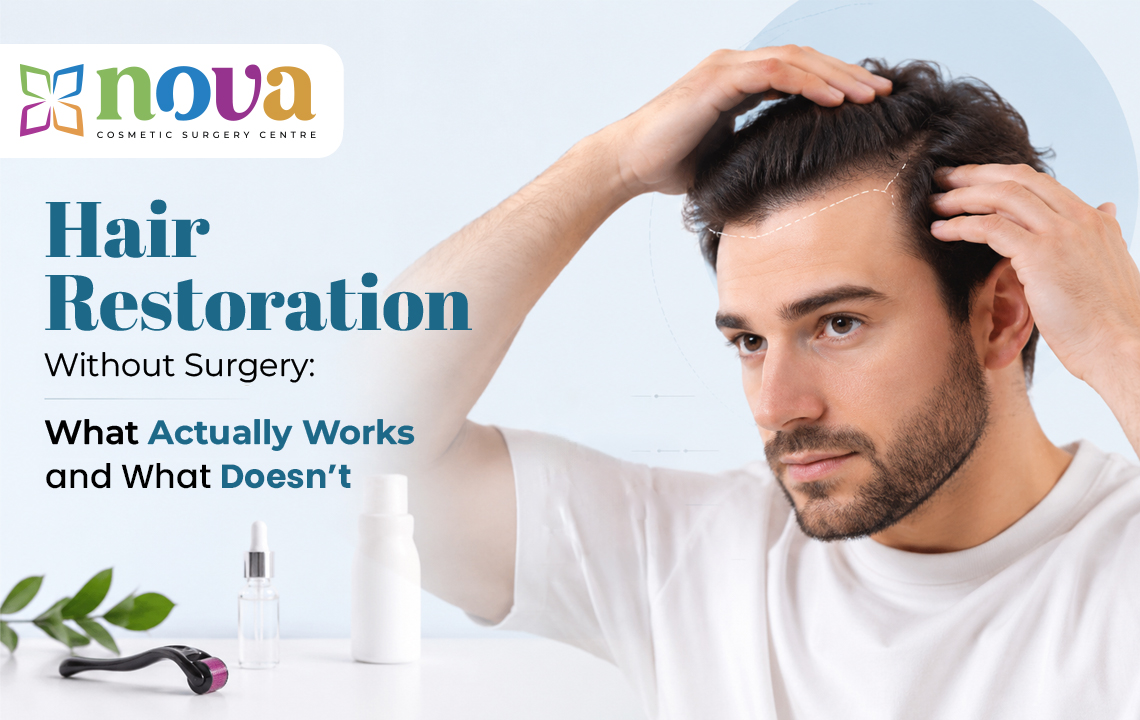
Hair restoration does not always mean hair transplant surgery. In many early or moderate cases, hair loss can be managed with non-surgical treatments that aim to slow shedding, strengthen existing follicles, and improve hair density.
The most important step is identifying the cause of hair loss first, because treatment depends on whether the issue is genetic hair loss, stress-related shedding, nutritional deficiency, hormonal imbalance, scalp disease, or another medical trigger.
Medical treatments such as minoxidil and finasteride are commonly used for pattern hair loss. Minoxidil can help stimulate growth and reduce further shedding, while finasteride may slow hair loss and support regrowth in suitable male patients.
Other non-surgical options like PRP therapy, low-level laser therapy, and microneedling may also help in selected cases, especially when follicles are still active. These treatments usually work best when started early and followed consistently.
Many viral hair loss remedies promise fast regrowth, but not every trending solution is medically reliable. Oils, home remedies, random supplements, and “instant regrowth” products often fail when the root cause of hair loss is not addressed.
Supplements only help when there is a proven deficiency. Taking unnecessary supplements without testing may not improve hair growth and can sometimes cause harm.
Non-surgical hair treatments take time. Results are not immediate, and visible improvement may take several months depending on the treatment and severity of hair loss. Minoxidil, for example, often needs continued use to maintain its benefits.
Stopping treatment too early can lead to renewed shedding or loss of progress. Hair restoration without surgery works best when patients follow a structured plan rather than switching between multiple treatments too quickly.
Non-surgical hair restoration can work, but only when the right treatment is chosen for the right cause. It is most effective in early-stage thinning, where follicles are still alive and responsive. The key is realistic expectations. Medical treatments can slow hair loss, improve density, and strengthen existing hair—but they may not fully restore completely bald areas. Understanding what works and what doesn’t helps people make smarter, safer decisions.

# 48 Cowley Brown Road, R.S. Puram, Coimbatore-641002
Email : drvikramk@gmail.com
Call us or what's app at +91 89036 15469


© 2026 nova cosmetic surgery centre. All rights reserved.