

Posted Date : 22 Oct 2025
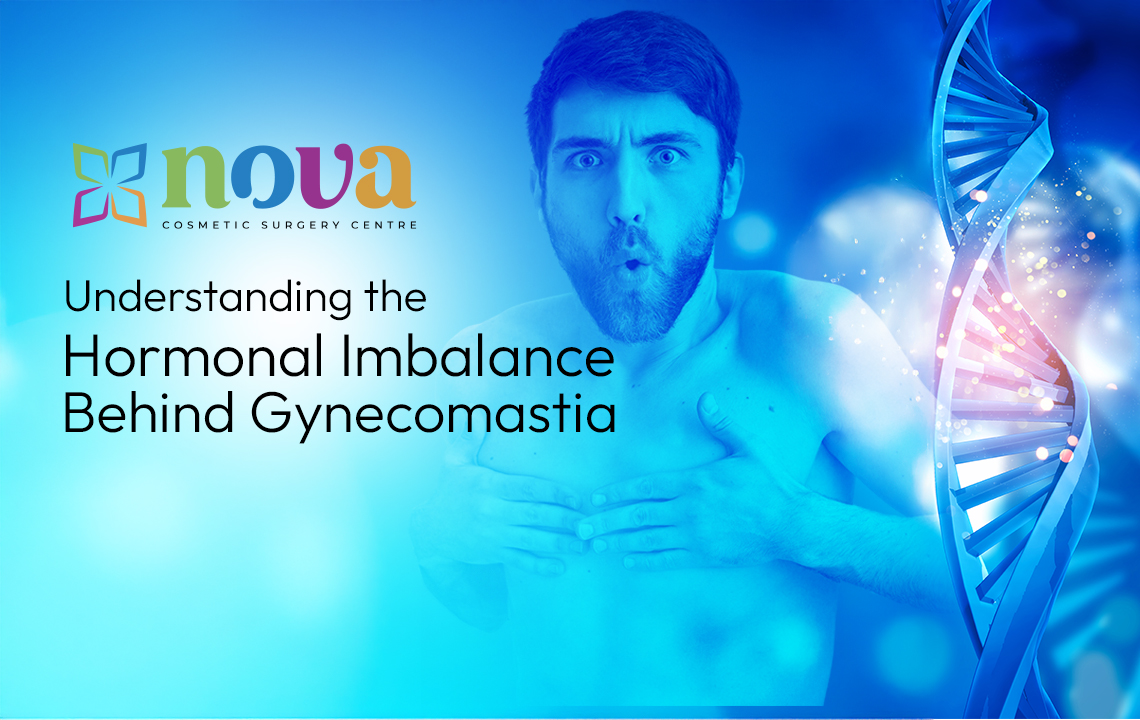
Gynecomastia is the enlargement of breast tissue in men, often caused by an imbalance between the hormones testosterone and estrogen. While both hormones are present in men, testosterone dominates; when estrogen levels rise or testosterone drops, breast tissue can begin to grow, leading to visible swelling or puffiness around the chest.
Testosterone supports male characteristics such as muscle mass and body hair, while estrogen regulates certain cellular functions, even in small amounts. When this delicate balance shifts — either due to decreased testosterone, increased estrogen, or both — the body can respond with changes like gynecomastia.
Several factors can disrupt this balance and trigger gynecomastia:
Gynecomastia typically appears as firm or rubbery tissue beneath one or both nipples. It may be tender to touch or simply cause cosmetic concern. While it’s benign, the emotional effects — such as embarrassment or self-consciousness — can be significant.
Treatment depends on the cause and severity. In some cases, hormone levels rebalance naturally, and the condition resolves on its own. For persistent cases, options include:
Maintaining a balanced lifestyle can help prevent hormone-related issues. Regular exercise, a healthy diet, adequate sleep, and avoiding unnecessary steroid or drug use all support healthy testosterone levels.
Gynecomastia is not just a physical change — it’s a reflection of the body’s internal hormonal balance. Understanding its hormonal roots helps remove the stigma and highlights that it’s a treatable medical condition, not a flaw. With modern medical and surgical solutions, men can restore both hormonal health and self-confidence, regaining a balanced sense of well-being inside and out.

# 48 Cowley Brown Road, R.S. Puram, Coimbatore-641002
Email : drvikramk@gmail.com
Call us or what's app at +91 89036 15469


© 2026 nova cosmetic surgery centre. All rights reserved.