
Posted Date : 05 May 2025
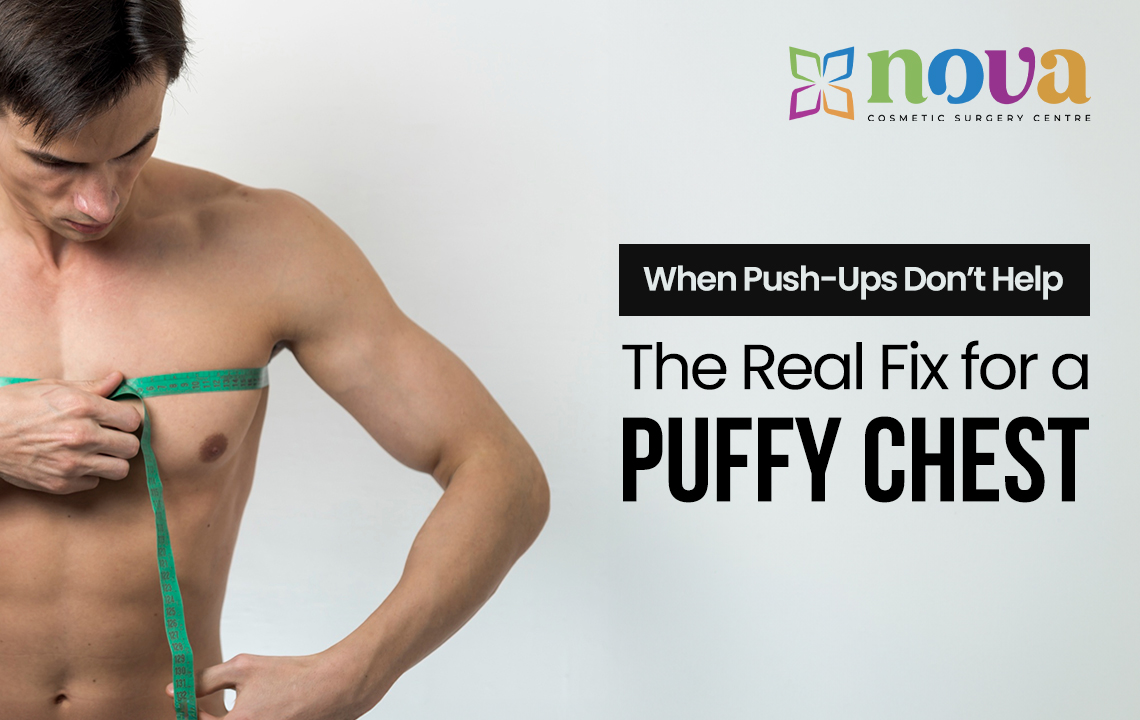
Gynecomastia — commonly referred to as “man boobs” — is a condition that affects many men silently. Despite hours at the gym and clean diets, some men still struggle with a soft, enlarged chest that doesn’t respond to exercise. Why? Because it’s not fat or lack of muscle — it’s gynecomastia.
Gynecomastia is the enlargement of male breast tissue caused by a hormonal imbalance — typically an increase in estrogen or a decrease in testosterone. Unlike fat, this is firm, glandular tissue that cannot be burned away through diet or training.
Even the most disciplined fitness routine won’t resolve true gynecomastia. That’s because the issue isn’t about body fat or muscle tone — it’s about an underlying tissue buildup. That’s why even lean, athletic men can develop a puffy or feminine-looking chest despite visible abs or a strong upper body.
It’s common to confuse excess chest fat with gynecomastia, but there are key differences. True gynecomastia feels firmer and more rubbery — typically located directly beneath the nipple area. It may also feel slightly tender or sensitive. This tissue is usually symmetrical and doesn’t fluctuate much with weight gain or loss.
In contrast, pseudogynecomastia is caused by fat accumulation. It tends to feel soft, jiggles like regular body fat, and is usually associated with overall weight gain. It may improve with weight loss and resistance training, unlike true gynecomastia, which remains stubborn no matter how much fat is shed.
When push-ups and clean eating don’t deliver the chest you deserve, it’s time to look deeper. Gynecomastia isn’t a gym problem — it’s a medical condition rooted in hormonal or glandular causes. Understanding the difference is the first step toward reclaiming your confidence. With the right diagnosis and treatment, a flatter, more defined chest is absolutely achievable — and for many men, it can be a life-changing shift in both body and mindset.

# 48 Cowley Brown Road, R.S. Puram, Coimbatore-641002
Email : drvikramk@gmail.com
Call us or what's app at +91 89036 15469


© 2026 nova cosmetic surgery centre. All rights reserved.