
Posted Date : 27 May 2026
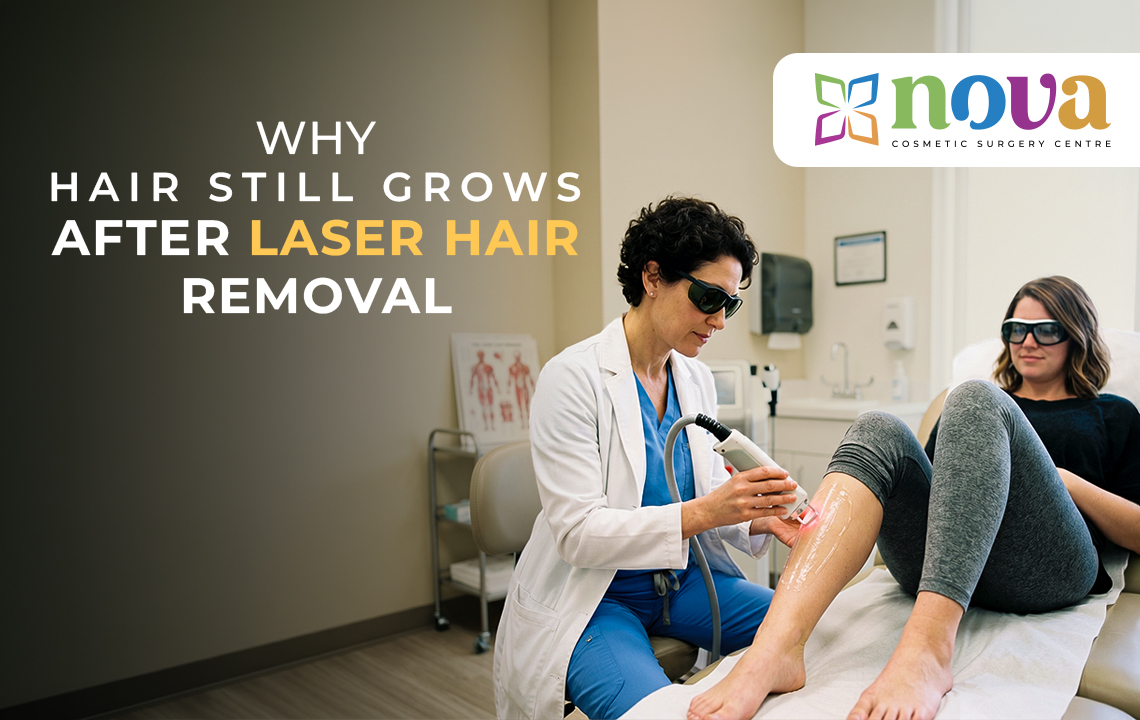
Laser hair removal targets hair follicles using concentrated light energy. The laser damages the follicle to slow down future hair growth and reduce hair density over time.
However, the treatment works best on follicles that are actively growing. Since not all hairs are in the same growth phase at the same time, some follicles may remain unaffected during a session.
Hair grows in cycles, including growth, transition, and resting phases. Laser treatment is most effective during the active growth stage, known as the anagen phase.
Because only a percentage of hairs are in this stage during each session, multiple treatments are required to target follicles effectively over time.
Laser hair removal significantly reduces hair growth, but it does not always eliminate every follicle permanently. Some follicles may recover partially and produce finer, lighter hair later.
Hormonal changes, genetics, medications, and underlying medical conditions can also stimulate new hair growth even after successful treatment.
One of the biggest misconceptions is expecting completely permanent hair elimination after a few sessions. In reality, laser treatment is considered a long-term hair reduction procedure rather than guaranteed total removal.
Most individuals experience slower growth, reduced density, and finer hair texture instead of complete absence of hair forever.
Seeing some hair growth after laser treatment is normal and expected. The goal of laser hair removal is long-term reduction and easier maintenance, not necessarily complete permanent removal of every hair follicle. Understanding realistic expectations helps individuals appreciate the gradual and lasting improvements laser treatment can provide.

# 48 Cowley Brown Road, R.S. Puram, Coimbatore-641002
Email : drvikramk@gmail.com
Call us or what's app at +91 89036 15469


© 2026 nova cosmetic surgery centre. All rights reserved.